- Thread starter
- #21

Doesn’t seem like the best racing advice especially when it comes to safetyDo what makes you feel good.

Personally for me I’d prefer to do what makes the car safest, so if anyone has ideas on that I’m all ears

This site may earn a commission from merchant affiliate links, including eBay, Amazon, and others.
Doesn’t seem like the best racing advice especially when it comes to safetyDo what makes you feel good.
After I insisted, he said, "OK - but if we're going to do it, we're going to do it right."

I was trying to give you advice, you didn't like it.Doesn’t seem like the best racing advice especially when it comes to safety
Personally for me I’d prefer to do what makes the car safest, so if anyone has ideas on that I’m all ears
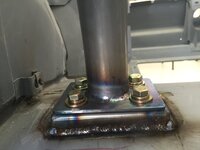
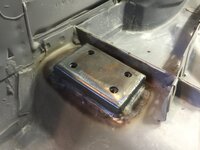
He's 100% right.Similar to Fabman, my chassis fabricator pushed back when I told him I wanted a "bolt-in" roll bar. He said he doesn't like anything chassis-related to be bolted - it should all be welded.
After I insisted, he said, "OK - but if we're going to do it, we're going to do it right."
I guess the bottom line is, if you are going to use this bar, install it as it was intended. Don't take short cuts. It's dicey already.Guess that's the question then - what's the right way to do it. Every bolt-in roll bar manufacturer does it differently, and it doesn't seem that there are any set standards on what is best.
In my case also, I'm really just using it as a harness bar. You wouldn't weld-in a harness bar...
I was trying to give you advice, you didn't like it.
A bolt in bar needs to have bolts through the floor with a proper backing plate. You have to think of the pull out strength.
The pull out strength of a nutsert is nowhere near adequate. Should have a plate that at minimum matches the plate above it.
Some of these cars are difficult to make customer level install kits for so short cuts are taken in the design phase.
If a proper backing plate cannot be fitted, a threaded pad can be welded to the floor like the pics from above.
Its less user friendly because of the fabrication that's needed, but this is by far less prone to pull through.
Sheet metal rips quite easily in a crash so keep that in mind when considering attachment methods.
Best of luck to you.I very much like the advice I'd just want to find some hard data before making any big changes like that to my cage setup. Having a plate underneath that matches the plate above would require a significant amount of cutting into the chassis, modifying the rear subframe, and that carries with it its own safety risks I think. Likewise with a threaded pad on top.
I am sure any fabricator would use some kind of FEA tool to determine this, so if anyone wants to run the numbers on that it would be much appreciated. My preliminary calculations would suggest a 351G crash would be required to tear the nutserts out of the sheet metal, which is beyond any normal crash, but I'm sure there's factors I'm forgetting.
I guess the bottom line is, if you are going to use this bar, install it as it was intended. Don't take short cuts. It's dicey already.
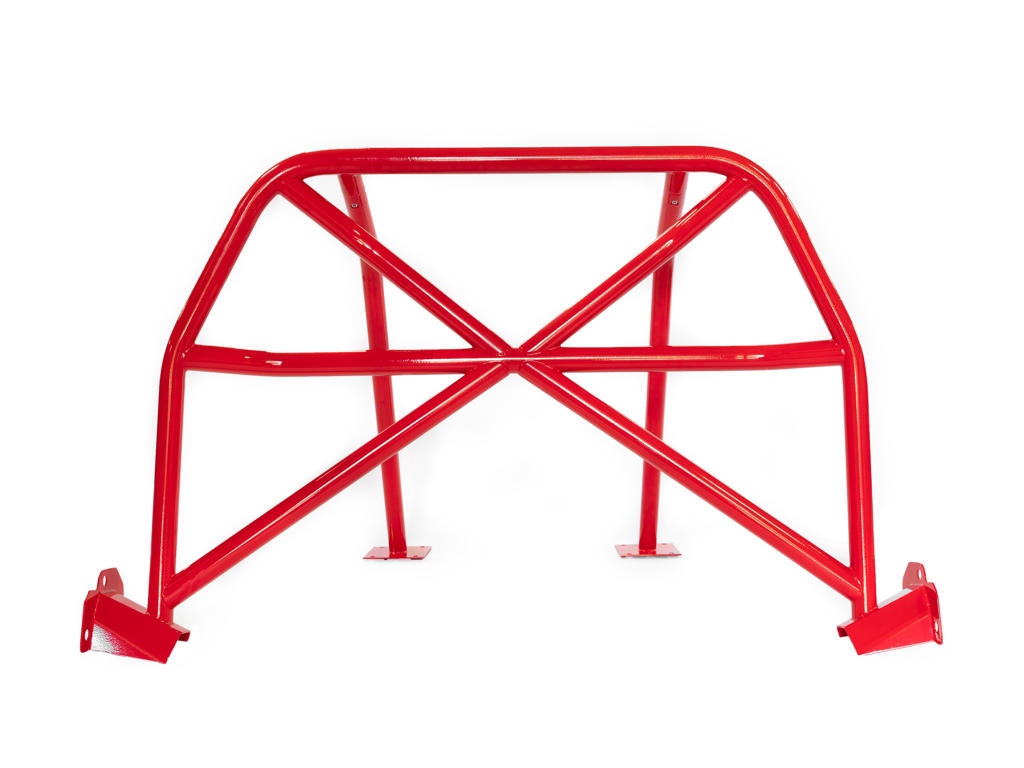
The CMS bar bolts to the rear seatbelt mounts. Not as robust as the watson style brace, but easier to install and still very solid.
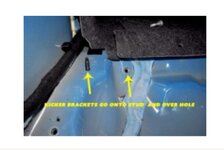
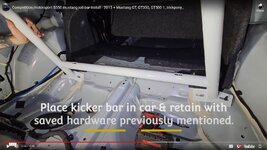
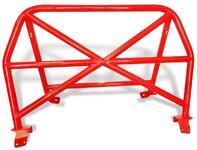
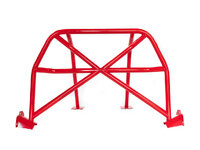
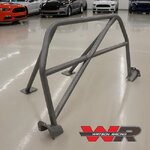
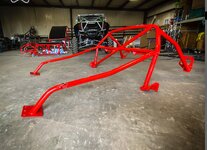 .
.
 www.fathouseperformance.com

Bolt in bars are never going to be as good as weld ins. That being said, even weld ins need gusset plates. The only way I can think of with regards to holding those plates in place is to have a friend hold them while you start the bolts. Back in the day,as a kid, I'd work on the neighbors racecar for stickers, but those days are prolly over since most kids are apparently allergic to anything involving effort. As far as misc crap in that area, I can't help you,I'm just not familiar with it, but on project superbeater there is some ideas on building a rear seat delete that accommodates a roll bar.
With regards to Fabman, that guy is a master fabricator, I would trust his stuff with my life any day, so when he makes a comment ( or most of them) I would listen.
 . Much as I'd love to do von Mises calculations on a napkin like the old days, modern software makes it too easy.. I set up a quick simulation in Autodesk Fusion and was able to see if an impact force was applied that the plate would start bending, and where the sheet metal would tear away from the bolts.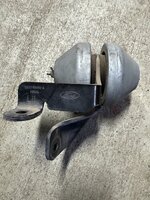
Im a prototype fabricator and 90% of my work is under NDA with fortune 500 companies so no, I can’t post pics on a website. Several here have been to my facility and can tell you first hand what we’re capable of. A nut cert has crap for pullout in sheet metal. A computer is super handy but when the rubber meets the road they come ask me what will work so, take that with a grain of salt.Hmm yeah it might be a long shot to hire the neighborhood kids and pay them in decals, but yes I have someone that can help me hold them in place.
And yes Fabman is no doubt the best fabricator around, but I do like to have computational data wherever possible, and I would guess that's not his forte since his whole company's website is currently down
I haven't yet been able to find the best way to replicate a nutsert, but now I don't think that'll be necessary after all - I was able to remove a vibration dampener piece that gets me much better access such that I might be able to install the nut plates. It's only on Ecoboost mustangs specifically, to mitigate some kind of NVH. It was preventing access of the whole driver side area where I would be installing those nutplates, and it also weighs 7 lbs. So it looks like a good candidate for deleting.
View attachment 100876
Odd, I often like to comment on threads for that same reason. Theres always so much to learn and it’s awesome when there’s that one guy who knows more about the subject than anyone else, as I typically learn things I never knew about. Speaking of which, that’s pretty clever on the website! I’m guessing by advertising it on your car and trailer it allows you to make certain tax deductions because the racing expenses can be part of the business - but by having no website you avoid paying for the hosting, so it’s a win win. That’s another area I’m learning a ton about. There’s all sorts of budgeting tricks I need to research more on.This is why I rarely comment on threads anymore, there’s always that one guy who asks a question then suddenly knows more about the subject than everyone else.
This is why I rarely comment on threads anymore, there’s always that one guy who asks a question then suddenly knows more about the subject than everyone else.

 studiorsr.com
 mooreracechassis.com
In IMSA they actually have 2 sets of bars running to the back of the car and both have X bracing. Those bars are li.ited to approximately the area above the diff. There's several reasons for this, first off, the roll cage is supposed to protect the driver, not to add stiffness to the car's chassis, especially in production car classes. Secondly, production cars have built in crush zones that the organizers would like to utilize on the race car, firming this up with tubing would negate that. This is why 90% of cages/ rollbars don't go through the firewall or extend past the rear shock mounts.