The Mustang Forum for Track & Racing Enthusiasts

Taking your Mustang to an open track/HPDE event for the first time? Do you race competitively? This forum is for you! Log in to remove most ads.

  • Welcome to the Ford Mustang forum built for owners of the Mustang GT350, BOSS 302, GT500, and all other S550, S197, SN95, Fox Body and older Mustangs set up for open track days, road racing, and/or autocross. Join our forum, interact with others, share your build, and help us strengthen this community!

Minimum Oil Temperature?

This site may earn a commission from merchant affiliate links, including eBay, Amazon, and others.

Yes, engine oil has a higher thermal capacity and will take more energy to heat up than the engine coolant. Another reason would be because the coolant is designed to cool around the cylinders from the heat produced during combustion and the engine oil, for the most part, is cooling and lubricating the rotating assembly where much less heat is naturally produced.

Oil has a higher thermal capacity, but much lower heat transfer rate. Salt water is about the best you can do for cooling. This would corrode like crazy, so we run straight water with a surface tension modifier/pump lubricant like Water wetter or the VP stuff.

If you have a cooling problem with a car, it's almost always that the real problem is the water is too hot. Ideally on a Coyote, you'd be 80-85*C water and oil in range of 100*. Oil is *much* less sensitive to running temp than water.
 
Last edited:
Side note to JDMac’s orig post, the ‘06-‘13 C6 Z06 & ‘10-13 grand sports had a very effective 6”x22” factory oil cooler mounted right up front in direct airflow & those cars had factory DIC that showed oil temps.

Until I zip-tied a 6”x22” cover over the oil cooler, it was difficult to get oil even up to 150-160* unless it was at least 60-70’s ambient outside . After I put that cover on, it would get over 170-180* much faster, stay in the 180-190’s but rarely exceeded 190-200* even in pretty hard high rpm driving.

I’d remove that cover for track days at Laguna and Buttonwillow, etc where that front oil cooler was perfect for those conditions, but for regular street driving imho it was factory (awesome) overkill, but prohibitive in the oil to getting up to proper temp. I only mention this for guys running dual use cars & aftermarket oil coolers without an oil temp gauge.
 
Last edited:

My Dark Horse does something to control oil heading through the cooler, as I get up to 180 pretty easily. I can hit 190 if driving longer distances or higher speeds like on the interstate if the weather is warm.

I always assumed it has some kind of thermostat, but I do not know and have not researched it.

UPDATE: This thread says "#14 is the thermostatic valve"
 
View attachment 94180

I don't know if this is much of an update, but here is a pic of the sandwich plate with the filter removed. It looks like the bypass is opening but the oil's path of least resistance is still through the exchanger. I have reached out to Setrab and they agreed that the temperature seems lower than it should be. I'll give an update once they get back to me.
To update this, we found out that the sensor was not properly grounded using the sandwich plate. It would ground through the oil when full, but it would provide a much higher resistance (and reading) than it should. Adding a dedicated ground wire between the sensor and the block allowed the temperatures to be read correctly.
 
I generally wait until track key flips to ACTIVE. IIRC this is when coolant temp is 170F for a brief window. Then I unleash.
 
Until I zip-tied a 6”x22” cover over the oil cooler, it was difficult to get oil even up to 150-160* unless it was at least 60-70’s ambient outside .
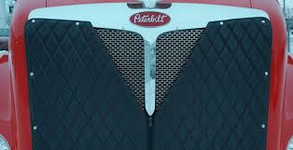
The big rig trucks have something called a "winter front" that's does the same - it's a cover over the radiator grille used in cold weather to reduce the air flow.
1780726999842.png
 
Last edited:

Oil temp of 130 F is fine to begin pushing. The warm up lap of a race or TT session is fine, keep revs below 5500 until warm. You will find it difficult to get the oil hotter through idling or even normal driving. Now the oil gains the most heat in cooling the valvetrain, especially the spring. Lots of energy there and oil draws that heat away from the springs, valves and followers. There is a direct correlation in oil temp and rpm. Below 7000 the oil will stay at 250 F or below indicated, above you will see 280-290. This is the Ford calculated reading, actual measured temps are 15-20 degrees less. I measure at the pump discharge after the filter. The oil pump takes sump oil and squeezes it between the gearotors to pressurize it, that also builds heat. But in the sump is fine and is where the DHR sensor is located, we see 235 to 250 during a race typically, unless in a following draft where it will climb higher.
 
Oil temp of 130 F is fine to begin pushing. The warm up lap of a race or TT session is fine, keep revs below 5500 until warm. You will find it difficult to get the oil hotter through idling or even normal driving. Now the oil gains the most heat in cooling the valvetrain, especially the spring. Lots of energy there and oil draws that heat away from the springs, valves and followers. There is a direct correlation in oil temp and rpm. Below 7000 the oil will stay at 250 F or below indicated, above you will see 280-290. This is the Ford calculated reading, actual measured temps are 15-20 degrees less. I measure at the pump discharge after the filter. The oil pump takes sump oil and squeezes it between the gearotors to pressurize it, that also builds heat. But in the sump is fine and is where the DHR sensor is located, we see 235 to 250 during a race typically, unless in a following draft where it will climb higher.
what kind of temps are you guys seeing on the formation lap across the gearbox, oil, and water? I always struggle to get the gear box hot...takes a good bit longer than the engine.
 
what kind of temps are you guys seeing on the formation lap across the gearbox, oil, and water? I always struggle to get the gear box hot...takes a good bit longer than the engine.
Water I get to 180 pretty quickly, half lap out. transmission temps don't rise much above 125 until midway through a session, and differential usually activates the thermal switch (190) about 15 minutes into a race/session.
 

Latest posts

Buy TMO Apparel

Buy TMO Apparel
Top