The Mustang Forum for Track & Racing Enthusiasts

Taking your Mustang to an open track/HPDE event for the first time? Do you race competitively? This forum is for you! Log in to remove most ads.

  • Welcome to the Ford Mustang forum built for owners of the Mustang GT350, BOSS 302, GT500, and all other S550, S197, SN95, Fox Body and older Mustangs set up for open track days, road racing, and/or autocross. Join our forum, interact with others, share your build, and help us strengthen this community!

Ford hypercar testing

This site may earn a commission from merchant affiliate links, including eBay, Amazon, and others.


Disappointed they won't have an entry in IMSA, but I can understand prioritizing running the full WEC season to qualify for a Le Mans 24 entry. Maybe we'll see them at the 2028 Daytona 24. If they do, I'm hoping Ford does a hospitality shindig like they did for the 2nd gen Ford GT debut.
 
We get Dallara, Oreca, Multimatic and Ligier. The engine are bespoke, but the gearbox and aero packages are similar. There are different dampers and other finer points.

Honestly, a tub is kind of a tub. Suspension geometry doesn't really change anything for a fan. The aero package dominates the performance of the car.
 
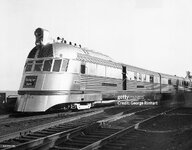
To be fair, this is a train from the 1930's.
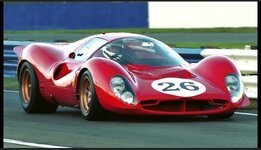
True, but I think that's 1/2 Art Deco styling and 1/2 actual aero. The 1930's had some amazing car designs at the high end - Delahaye, Buggati coupes, Talbot-Lago.

Thinking more about it, it seems like optimizing to reduce drag -- "streamlining" is the term used in the 30's -- produced the cars that we consider pretty, and when designers started optimizing for downforce is when racecars lost that organic form. Though there are still parts that retain the fluidity and graceful curves -- some current F1 sidepods for example.
 
True, but I think that's 1/2 Art Deco styling and 1/2 actual aero. The 1930's had some amazing car designs at the high end - Delahaye, Buggati coupes, Talbot-Lago.

Thinking more about it, it seems like optimizing to reduce drag -- "streamlining" is the term used in the 30's -- produced the cars that we consider pretty, and when designers started optimizing for downforce is when racecars lost that organic form. Though there are still parts that retain the fluidity and graceful curves -- some current F1 sidepods for example.
This was my point. That Zephyr was built to look cool. They didn't know squat about aerodynamics and what they did know they couldn't do much with.

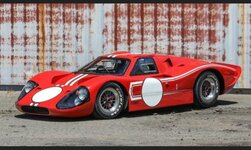
This is the same for a lot of iconic cars, from the Lotus 7, Cobra, original Testarossa.... Anything from before about 1965. They actually did aero testing on the GT40, but it was crap aerodynamically, in general. To be fair, it wasn't until the 90's that people were getting a solid grasp on aerodynamics, but they start with a body shape and then add aero bits. Now, aerodynamics are part of the initial design. The body shapes we get are to provide a function, but they have to follow whatever rules package and be accepted by whichever corporate office is paying for it. There are a lot of cooks in the kitchen.

1955-65 was a magic time for fighter jets. If you look at those jets, they all look fast. It was the, "If it looks right it will fly right." era. However, they had a lot of planes that didn't fly right. They were bloody beautiful, though. I think the same can be said about a lot of race cars.
 
It's essentially the GT3 engine plus the hybrid system. Not 100% carryover, but the basis has already more than proved itself in endurance racing.
I didn't realise it was coyote based. 5.4L
Dug deeper, loosely based.
I really want to know what they've changed to keep it alive for the durations they need. It sounds absolutely killer. can't wait to hear one at COTA next year
 
This was my point. That Zephyr was built to look cool. They didn't know squat about aerodynamics and what they did know they couldn't do much with.

This is the same for a lot of iconic cars, from the Lotus 7, Cobra, original Testarossa.... Anything from before about 1965. They actually did aero testing on the GT40, but it was crap aerodynamically, in general. To be fair, it wasn't until the 90's that people were getting a solid grasp on aerodynamics, but they start with a body shape and then add aero bits. Now, aerodynamics are part of the initial design. The body shapes we get are to provide a function, but they have to follow whatever rules package and be accepted by whichever corporate office is paying for it. There are a lot of cooks in the kitchen.

1955-65 was a magic time for fighter jets. If you look at those jets, they all look fast. It was the, "If it looks right it will fly right." era. However, they had a lot of planes that didn't fly right. They were bloody beautiful, though. I think the same can be said about a lot of race cars.
F5 was a prime example, couldn't break Mach 1, until theY Coke bottled the fuselage. Fugly cars should be factored into the BoP..
We get Dallara, Oreca, Multimatic and Ligier. The engine are bespoke, but the gearbox and aero packages are similar. There are different dampers and other finer points.

Honestly, a tub is kind of a tub. Suspension geometry doesn't really change anything for a fan. The aero package dominates the performance of the car.
Yes, and shock tech has stalled, at least had stalled. Seems you can only do so much on about 4 inches of travel.I would imagine at full aero load, these things are riding the bump stops.
 
F5 was a prime example, couldn't break Mach 1, until theY Coke bottled the fuselage. Fugly cars should be factored into the BoP..

Yes, and shock tech has stalled, at least had stalled. Seems you can only do so much on about 4 inches of travel.I would imagine at full aero load, these things are riding the bump stops.
Exactly, but how bad-ass were planes like the F-100 & F-104? They just looked fast. They're all before my time, but I've always thought they were cool.

The front of a prototype gets about 12-25mm of travel and 30-50mm travel on the rear. Obviously, some tracks are smooth, they get the lower numbers. Sebring and Mosport get the bigger numbers. Most tracks will have 1 or 2 events where you get the big motion, but the vast majority of the time they spend in about an 8mm window range. Shaft speeds get to about 750mm/sec over big stuff, but they spend most of their time between 20mm/s one way or the other.

They locked the aero package, but Indycar has specifically left dampers open. If you get a chance to watch an Indycar soak up rough pavement or curbs, watch them. They are really impressive. Sportscar guys still have things to do, but there are a lot more rules than with the open-wheel guys.

A couple years ago, when the WEC guy were running Sebring, the day before they ran, there were some Indycar teams running the short course. Watching the WEC cars after the Indycars was an eye opener. The sporty cars looked bloody awful in comparison. The only reasonable prototype was the Caddy, but they still weren't good.
 
Top