The Mustang Forum for Track & Racing Enthusiasts

Taking your Mustang to an open track/HPDE event for the first time? Do you race competitively? This forum is for you! Log in to remove most ads.

  • Welcome to the Ford Mustang forum built for owners of the Mustang GT350, BOSS 302, GT500, and all other S550, S197, SN95, Fox Body and older Mustangs set up for open track days, road racing, and/or autocross. Join our forum, interact with others, share your build, and help us strengthen this community!

coil over spring rate help

This site may earn a commission from merchant affiliate links, including eBay, Amazon, and others.

Wouldn't do that. Need to throw some maths at this.
lb-in Wheel Rate = Motion Ratio^2 * Spring Rate * Spring Angle Correction Factor
Motion ratio for the front is 0.96, rear is 0.49. We are going to ignore the spring angle correction factor, don't have the data and don't think the angles are significant for this.

Lets look at your 800/800. It works out to be 737/192 at the wheels. Front 3.8 times stiffer.
Your old 800/1100 becomes 737/264 at 2.8 times
You mention you have some 700 fronts with your 1100 rears would be 645/264 giving 2.44 times. I'd honestly try this combo.
ByronJ had 400/1200. Works out at 368/288. 1.28 times. I think this is too far the opposite direction.
My 600/1000 becomes 550/240 at 2.3 times
Stan with 600/750 becomes 550/180 at 3.0 times.
Mavisky with 700/900 becomes 645/216 at 2.98 times

You can vary the rear rate significantly with only small resultant wheel rate change due to the motion ratio. ie you wont notice a 50lb or even a 100lb change. 100lbs changes the wheel rate by 24lb.
Are you doing these calculations assuming divorced rear springs? That makes since given the 0.49 motion ratio. My springs are not divorced nor are Stan's or Honeybadger's.
 
Wouldn't do that. Need to throw some maths at this.
lb-in Wheel Rate = Motion Ratio^2 * Spring Rate * Spring Angle Correction Factor
Motion ratio for the front is 0.96, rear is 0.49. We are going to ignore the spring angle correction factor, don't have the data and don't think the angles are significant for this.

Lets look at your 800/800. It works out to be 737/192 at the wheels. Front 3.8 times stiffer.
Your old 800/1100 becomes 737/264 at 2.8 times
You mention you have some 700 fronts with your 1100 rears would be 645/264 giving 2.44 times. I'd honestly try this combo.
ByronJ had 400/1200. Works out at 368/288. 1.28 times. I think this is too far the opposite direction.
My 600/1000 becomes 550/240 at 2.3 times
Stan with 600/750 becomes 550/180 at 3.0 times.
Mavisky with 700/900 becomes 645/216 at 2.98 times

You can vary the rear rate significantly with only small resultant wheel rate change due to the motion ratio. ie you wont notice a 50lb or even a 100lb change. 100lbs changes the wheel rate by 24lb.
this data calc is great thanks. is there a "sweet spot" for the ratios f to r (leaving driver bias out of the equation)? Also is this the same for coil over setup than the oem rear spring?
 
So I appreciate all the answers and insight and by no means am ending the discussion. Even learned a thing or 2 lol. I am going to move to an 1100 lb spring in the rear and keep the 800 up front (I would roll over a 700 unit in the past). I did order 950 rears today as we will be doing a full days test at Road Atlanta in the next couple weeks so if needed can do a rear spring change. my chassis engineer will be on hand to help out and maybe a guest driver appearance from some hired gun pros to give their input.
 
red comments are the spring on shock rates.

lb-in Wheel Rate = Motion Ratio^2 * Spring Rate * Spring Angle Correction Factor
Motion ratio for the front is 0.96, rear is 0.49. and for you complicated people the spring on rear shock ratio is 0.7 apparently.

Lets look at your 800/800. It works out to be 737/192 at the wheels. Front 3.8 times stiffer. 737/392 - 1.88
800/950 becomes 737/465.5 - 1.58

Your old 800/1100 becomes 737/264 at 2.8 times 737/539 - 1.36
You mention you have some 700 fronts with your 1100 rears would be 645/264 giving 2.44 times. I'd honestly try this combo. 645/539 - 1.2
ByronJ had 400/1200. Works out at 368/288. 1.28 times. I think this is too far the opposite direction.
My 600/1000 becomes 550/240 at 2.3 times - starting to thing i can go higher on my rear given its divorced which may help dial out the subtle understeer.
Stan with 600/750 becomes 550/180 at 3.0 times. 550/367 - 1.5
Mavisky with 700/900 becomes 645/216 at 2.98 times 645/441 - 1.46

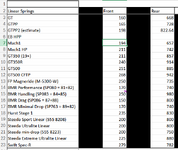
I fundamentally look for patterns in things to see what works. Spreadsheet i found in my trolling of the internet.
What i see is we all don't like driving see-saws as shown by the over double front spring rates we all run. Photos of mine diving to the front bumpstops effectively told me i needed more up front. The question is then how much is too much. We all seemed to think 800 was too high for non aero but its a pretty smallish window back to where this small sample set is running.
The rear on the other hand seems to be able to carry a wide range of wheel rate and people are happy.
1755641414203.png
Either way look forward to hearing about your testing and what the consensus is on the rates with possibly multiple drivers in the same car.
Suspension - the other black magic.
 
red comments are the spring on shock rates.

lb-in Wheel Rate = Motion Ratio^2 * Spring Rate * Spring Angle Correction Factor
Motion ratio for the front is 0.96, rear is 0.49. and for you complicated people the spring on rear shock ratio is 0.7 apparently.

Lets look at your 800/800. It works out to be 737/192 at the wheels. Front 3.8 times stiffer. 737/392 - 1.88
800/950 becomes 737/465.5 - 1.58

Your old 800/1100 becomes 737/264 at 2.8 times 737/539 - 1.36
You mention you have some 700 fronts with your 1100 rears would be 645/264 giving 2.44 times. I'd honestly try this combo. 645/539 - 1.2
ByronJ had 400/1200. Works out at 368/288. 1.28 times. I think this is too far the opposite direction.
My 600/1000 becomes 550/240 at 2.3 times - starting to thing i can go higher on my rear given its divorced which may help dial out the subtle understeer.
Stan with 600/750 becomes 550/180 at 3.0 times. 550/367 - 1.5
Mavisky with 700/900 becomes 645/216 at 2.98 times 645/441 - 1.46

I fundamentally look for patterns in things to see what works. Spreadsheet i found in my trolling of the internet.
What i see is we all don't like driving see-saws as shown by the over double front spring rates we all run. Photos of mine diving to the front bumpstops effectively told me i needed more up front. The question is then how much is too much. We all seemed to think 800 was too high for non aero but its a pretty smallish window back to where this small sample set is running.
The rear on the other hand seems to be able to carry a wide range of wheel rate and people are happy.
View attachment 105493
Either way look forward to hearing about your testing and what the consensus is on the rates with possibly multiple drivers in the same car.
Suspension - the other black magic.
No V6? 😢 May need your calculatory expertise to find the optimal rates for my lighter than a GT, lighter than a EB HPP, little ole' V6.
 
No V6? 😢 May need your calculatory expertise to find the optimal rates for my lighter than a GT, lighter than a EB HPP, little ole' V6.
You may be surprised how little difference there is depending on mods done to each car. Curious if you have an actual weight of yours. Mine was within 50lbs of stock V6.
"The curb weight of a 2016 Ford Mustang V6 with an automatic transmission is 3,526 lbs, according to Edmunds." Real weights may vary when we add drivers.
Comparing stock internet weights of manual GT to V6 auto there is 5% difference.
Also, don't believe there is an optimal rate, as we have seen here, everybody seems to get to an outcome they like from a variety of directions.
 
I believe a lot of company's run small front springs to offer some ride compliance and the stock Magneride dampers on anything other than the GT500/GT350R and possible the Mach1 with the handling package just aren't up to managing a lot of front rate anyway.

For comparison here are publicly available spring rates for those of us who do true coilovers in the rear.

• Vorshlag's MCS GT Spring Package 450F 550R
• Vorshlag's MCS GTS Spring Package is 600F 750R
• Vorshlag's MCS GTR Spring Package is 800F 1100R
• MRR MCS street enthusiast 400F 600R
• MRR MCS gt4 spec 700F 900R
• MRR MCS gt4 optional 750F 1000R
• ISC Coilovers 504F 784R
• Nitron road 628F 658R
• Nitron track 799F 1028R
 
If you want to dive into more of the theory, here's a good article on the basics.
Note that the wheel rate is factored against the sprung mass* to arrive at a ride frequency. And for a desired ride frequency you can calculate the needed wheel rate, and then factor out the motion ratio to get the spring rate.

*Remember to use the F/R weight distribution for the difference in sprung mass F/R when doing the calculations.
 
You may be surprised how little difference there is depending on mods done to each car. Curious if you have an actual weight of yours. Mine was within 50lbs of stock V6.
"The curb weight of a 2016 Ford Mustang V6 with an automatic transmission is 3,526 lbs, according to Edmunds." Real weights may vary when we add drivers.
Comparing stock internet weights of manual GT to V6 auto there is 5% difference.
Also, don't believe there is an optimal rate, as we have seen here, everybody seems to get to an outcome they like from a variety of directions.
I haven't gone coil-overs yet, was looking at the MMR MCS once this car is track only, but I don't know if that is the move. Currently running Steeda suspension - progressive lowering springs, camber plate, front control arms with extended ball joints, non-adjustable strut/shock combo, cut bump stops, rear cradle stiffening kit - and a few other goodies from Steeda and other various places.

I will be going and getting my mustang weighed at a scaling station sometime soon, but I wanted to wait until roll-cage was in and maybe seats/harnesses/and a little more. The weight I have to target is NASA TT4 weight - 3731 with driver (205lb). If we want to go extreme, maybe TT3 weight once I can fully strip the car and tune to a higher whp...but TT4 for now.

I know you all will probably advise me to go coilovers one day...just so darn expensive and I would like to finish suspension completely before deciding on engine swap (LS...Predator...302...fully forge V6...not sure yet)
 
I haven't gone coil-overs yet, was looking at the MMR MCS once this car is track only, but I don't know if that is the move. Currently running Steeda suspension - progressive lowering springs, camber plate, front control arms with extended ball joints, non-adjustable strut/shock combo, cut bump stops, rear cradle stiffening kit - and a few other goodies from Steeda and other various places.

I will be going and getting my mustang weighed at a scaling station sometime soon, but I wanted to wait until roll-cage was in and maybe seats/harnesses/and a little more. The weight I have to target is NASA TT4 weight - 3731 with driver (205lb). If we want to go extreme, maybe TT3 weight once I can fully strip the car and tune to a higher whp...but TT4 for now.

I know you all will probably advise me to go coilovers one day...just so darn expensive and I would like to finish suspension completely before deciding on engine swap (LS...Predator...302...fully forge V6...not sure yet)
so you didn't ask, but just going to share for some additional food for thought. If I were to do it over again, I'd do it the opposite direction I did.

Assuming the basics are done (brake pads, sticky tires, basic safety gear, etc.) - the first thing I'd do is racing coil overs. I'd do it before engine, aero, etc. GOod Penske coilovers from Cortex will yield a much better driving experience and predictable race car than any other mod.

After coilovers, if i was going full race car, I'd go cage and related safety (fire, etc.).

After that, I'd add ideally add a sequential because its the most fun mod in the world - but its so asininely expensive I'd actually suggest aero.

THEN - power. And at every stage, rip as much weight as possible. like anywhere you can reasonably remove it, do it. Its the enemy.

Trust me, slinging a predictable, playful mustang around with 300 horse power right on the limit is a lot more fun than an understeer-y 500 hp pig.
 
so you didn't ask, but just going to share for some additional food for thought. If I were to do it over again, I'd do it the opposite direction I did.

Assuming the basics are done (brake pads, sticky tires, basic safety gear, etc.) - the first thing I'd do is racing coil overs. I'd do it before engine, aero, etc. GOod Penske coilovers from Cortex will yield a much better driving experience and predictable race car than any other mod.

After coilovers, if i was going full race car, I'd go cage and related safety (fire, etc.).

After that, I'd add ideally add a sequential because its the most fun mod in the world - but its so asininely expensive I'd actually suggest aero.

THEN - power. And at every stage, rip as much weight as possible. like anywhere you can reasonably remove it, do it. Its the enemy.

Trust me, slinging a predictable, playful mustang around with 300 horse power right on the limit is a lot more fun than an understeer-y 500 hp pig.
Any words of wisdom from you I listen to closer than a mad-man listens to his inner demons.

Anywho, yes that's the kit I wanted to go for...what a price, good Lord.

Yes, next on the list right now is better pads, maybe a partner's BBK, sticky tires/APEX wheels, harnesses and seats to go with the new Watson 4-point roll cage (and fire extinguisher with PT quick release bracket/clamp kit) I just installed, and then those coil-overs.

That's what I thought. 300hp, but always predictable. I like.

Maybe first on that list should be a bit more weight reduction.

Motorcycle license and a Honda Rebel comes first before anything else though, so that I have a "daily".
 
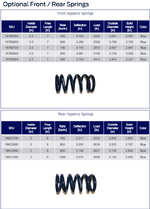
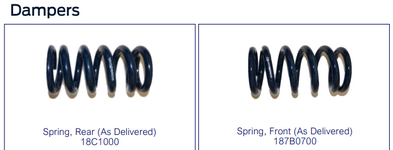
Speaking of true coilovers not sure how many of you spend time in the Dark Horse R documentation but they run true rear coilovers with the DSV Multimatic coilovers and they run 1000 lbs rear springs as the highest possible option with 900 lbs as the highest front option. Personally I think 800 lbs front with 1000 lbs rear (real coilover spring) should be the go to option for slicks. If you are running into the divorced spring location you need over 1600 lbs of springs (almost no one is making such high rate springs). Which is why ones you move to real slick tires you need to move to coilovers that don't use the divorced springs location. I hope this helps.
 
Speaking of true coilovers not sure how many of you spend time in the Dark Horse R documentation but they run true rear coilovers with the DSV Multimatic coilovers and they run 1000 lbs rear springs as the highest possible option with 900 lbs as the highest front option. Personally I think 800 lbs front with 1000 lbs rear (real coilover spring) should be the go to option for slicks. If you are running into the divorced spring location you need over 1600 lbs of springs (almost no one is making such high rate springs). Which is why ones you move to real slick tires you need to move to coilovers that don't use the divorced springs location. I hope this helps.
Yea and my coilovers came off of a car running slicks (700f/900r) and they worked great for him. Just took much fkr a 200tw tire in a parking lot.
 
Speaking of true coilovers not sure how many of you spend time in the Dark Horse R documentation but they run true rear coilovers with the DSV Multimatic coilovers and they run 1000 lbs rear springs as the highest possible option with 900 lbs as the highest front option. Personally I think 800 lbs front with 1000 lbs rear (real coilover spring) should be the go to option for slicks. If you are running into the divorced spring location you need over 1600 lbs of springs (almost no one is making such high rate springs). Which is why ones you move to real slick tires you need to move to coilovers that don't use the divorced springs location. I hope this helps.
No one is running 1000 lb rear springs on DHR race cars
 
THEN - power. And at every stage, rip as much weight as possible. like anywhere you can reasonably remove it, do it. Its the enemy.
Most people think power accelerates the car. It does, but the true measure is power-to-weight ratio. Same power with less weight also accelerates faster. But less weight also means you brake and turn faster - phases were power does not help you (and big "peaky" power can actually hurt). This is the Lotus (and Miata) formula.

A lot of people are obsessed with peak HP numbers. What you really need to care about is torque "area under the curve" in the rpm range you use on track.
 
What is the highest you guys run give us more info I know the options are different for different tracks just according to the manual the 1000 lbs is the highest possible option.
I would like to hear more about what the dhr people are running for spring rates and if they change per track as it will correlate pretty close to what I am doing.
 
Last edited:
I would like to hear more about what the dhr people are running for spring rates and if they change per track as it will correlate pretty close to what I am doing.
https://performance.ford.com/content/dam/fordPerformance/motorsport/mustang-challenge/pdfs/2025 DHR BOM Homologation v3.1.pdf It's a public link with all the Homologation parts. More info could be found here: https://performance.ford.com/motorsport/mustang-challenge/competitor-info Hope this helps.
 

Buy TMO Apparel

Buy TMO Apparel
Top