- Thread starter
- #661

yep. trans is a tank and I don't hesitate recommending it at all. And after having it apart and getting to touch basically every part of it, I'm an even bigger fan of it. It's light, easy to work on, and durable AF

This site may earn a commission from merchant affiliate links, including eBay, Amazon, and others.
What dry-break connectors are those? They don't look like Staubli's.ust realizing I have a lot to catch up on - I completely forgot to close the loop on the trans.
So as mentioned in a previous post, at the Nov event, the trans started getting really hot. It's ran dead cool all year - so overheating in 60 degree weather was weird. After verifying the pump and fan were working, I popped the fill plug off to check oil levels. A bunch of sparkly oil poured out. weekend done.
So once I got home, I pulled the trans to see what happened. Once I got it on the bench and started disassembly, I didnt make it very far before the problem was clear.
View attachment 101047
There's supposed to be a cage around those steel balls. Boooo
I took it down further and found metal shavings EVERYWHERE. Inside all the bearings, inside the shfit rail, I mean EVERYWHERE.
View attachment 101045
I also found one of the bolts was snapped and one loose. Man - this engine isn't even a voodoo and its still rattling everything apart.
View attachment 101046
I went all the way down. I reallllllly didn't want to put it back together knowing there could be metal circulating.
View attachment 101043
I ended up replacing all the bearings(ouch - those suckers are pricey) and all the seals/o-rings. All the gears looked MINT. A teeny bit of wear on the input shaft dog's but everything looks great. This is one stout like bad mama jama.
All back together (sans bell housing).
View attachment 101042
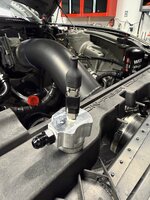
I also did some quality of life upgrades while I had it apart. Removal resulted in a horrific mess of oil and brake fluid. I got myself some dry breaks so it comes apart cleanly and you can remove without having to spend an hour cleaning afterwards.
View attachment 101041View attachment 101040
Off camera I also cleaned the lines and cooler. The lines are PTFE, so they cleaned up great. The cooler and pump took a bit more work. I ended up hot tanking, ultra sonic and pressure washing them. I ran some oil through them separate of the trans and it came through clean.
She's ready to go back in. Just need to finish up reinstalling the oil pan. I ended dropping the k-member to re-seal the oil pan. It's had a super slow leak all year from where I missed some RTV when I installed it. Used the opportunity to inspect the bearings, cylinders, etc. All good there.

Looks like these just from the disconnect sleeve and colouring. I can see upgrades to my trans and diff oil cooler system in the near future.What dry-break connectors are those? They don't look like Staubli's.
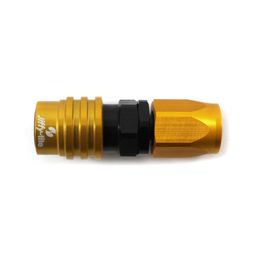
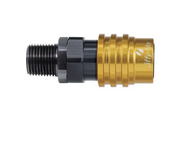
Yep. They’re the ones GAR944 mentioned. Didn’t go with Staubli’s since these aren’t brake lines. I’ve been tempted to do those some day. But they’re so bloody expensive.What dry-break connectors are those? They don't look like Staubli's.
Ding ding ding!Looks like these just from the disconnect sleeve and colouring. I can see upgrades to my trans and diff oil cooler system in the near future.
Place your bets to see if i was correct.View attachment 101048Jiffy-tite Quick Connect Dry Break Fittings
Jiffy-tite's revolutionary quick connect fluid fittings provide unsurpassed performance under extreme racing conditions. Constructed from lightweight aluminium with brass valves and stainless steel ball bearings Jiffy-tite fittings offer an easier and safer method of hose connection than regular...www.demon-tweeks.com
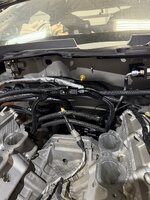
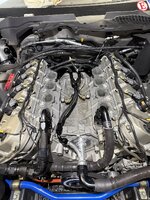

This is awesome....to be clear, you are plumbing water into or out of the back of the heads....?Okay - got the plumbing for my coolant crossover test worked out. To recap, I plan to record the water temps at the back each head with no crossover, then open a passage between the two (similar to popular "crossover head cooling mods" on the market). After getting data on that, I am going to test my own version that plumbs cool water from the front of the motor into the back.
crossover mod with ball valve to be able turn on/off that's reachable with the intake on.
View attachment 101087
My custom setup for supplying cooled water that will run under the intake. Got the idea from late model and dirt racing where they've begun running external coolant lines to help ensure all parts of the engine have cool water.
View attachment 101088
These will be in the back of each head to measure temps. Only hard data with this test
View attachment 101089
Into the back of the headsThis is awesome....to be clear, you are plumbing water into or out of the back of the heads....?
Interesting....why not out of the heads? It may just deadhead against the factory flow up out of the block into the heads.Into the back of the heads

Somewhere on here or YouTube Shawn has a great video where he walks through the water flow in the Coyote. Basically, the back of the heads are getting the water last, resulting in that area getting the water while its at the highest temp. My hypothesis is that removing water at that point would just reduce volume of water cooling the heads by the intake valves that comes out of the front heads without reducing the temp of the water cooling that part of the head.Interesting....why not out of the heads? It may just deadhead against the factory flow up out of the block into the heads.
That's how we did it way back when, every additional tap was an out, but maybe the flow path is different than what we had with the SBC's.
Interested to see what you learn from this.
Pulling water out the back just might balance that front to rear issue....but who knows.Somewhere on here or YouTube Shawn has a great video where he walks through the water flow in the Coyote. Basically, the back of the heads are getting the water last, resulting in that area getting the water while its at the highest temp. My hypothesis is that removing water at that point would just reduce volume of water cooling the heads by the intake valves that comes out of the front heads without reducing the temp of the water cooling that part of the head.
But you could be right - the higher pressure in the back could cause it to not see any of the fresh water. I should plumb an option that pulls water out and into the swirl tank. I'll work on something to test at the same event. The trick with that will be getting overall flow right. I discovered that if you have too much flow out the front of the heads, it doesn't have enough time to cool properly. At least that's what I think happened when I went from dual 12an lines to 16an lines on the outlets.

Somewhere on here or YouTube Shawn has a great video where he walks through the water flow in the Coyote. Basically, the back of the heads are getting the water last, resulting in that area getting the water while its at the highest temp. My hypothesis is that removing water at that point would just reduce volume of water cooling the heads by the intake valves that comes out of the front heads without reducing the temp of the water cooling that part of the head.
But you could be right - the higher pressure in the back could cause it to not see any of the fresh water. I should plumb an option that pulls water out and into the swirl tank. I'll work on something to test at the same event. The trick with that will be getting overall flow right. I discovered that if you have too much flow out the front of the heads, it doesn't have enough time to cool properly. At least that's what I think happened when I went from dual 12an lines to 16an lines on the outlets.
I haven't yet. I've only been coordinating with @5.2 liters of democracy so far. I'll send me a note and see what he thinks.Pulling water out the back just might balance that front to rear issue....but who knows.
Have you talked to Shaun about this? I bet he'd be interested in this process.
ah ha! so he did give me the idea for the re-route, not just the theory that the head mod does nothing. I'll have to reach out
This video is why I did not do the head cooling mod when I built my car. In the video, he does say that he thinks that putting cool water in would work, but this may have been an off the cuff remark.
Very interesting experiment!
I remember seeing that video....looks like you're right. Water "into" the back of the head.I haven't yet. I've only been coordinating with @5.2 liters of democracy so far. I'll send me a note and see what he thinks.
ah ha! so he did give me the idea for the re-route, not just the theory that the head mod does nothing. I'll have to reach out
yep - that sounds about right. I wish they'd publish overall flow number recommendations. I run an electric water pump that uses a controller to adjust speed based on temp instead of a thermostat. So ive had to do trial and error to find the right hose sizes.Ford recommend a 5/16 restriction in the outlet port of the passenger head if you're bypassing the heater core to insure correct cooling flow.
Page 10
FWIW The meziere pump I run is 65 gal/hr. In fact, all their pumps are 65 gal/hr. so maybe that's a magic number?yep - that sounds about right. I wish they'd publish overall flow number recommendations. I run an electric water pump that uses a controller to adjust speed based on temp instead of a thermostat. So ive had to do trial and error to find the right hose sizes.
So far dual 12an into 16 wye has been the best. I'm currently testing a 16an + 12an into 16an wye.
I think the OEM hose was 1.5in diameter? but the thermostat reduces flow a good bit.
Might be an interesting test to put a potentiometer on the pump and manipulate the flow on track to see what's most effective?yep - that sounds about right. I wish they'd publish overall flow number recommendations. I run an electric water pump that uses a controller to adjust speed based on temp instead of a thermostat. So ive had to do trial and error to find the right hose sizes.
So far dual 12an into 16 wye has been the best. I'm currently testing a 16an + 12an into 16an wye.
I think the OEM hose was 1.5in diameter? but the thermostat reduces flow a good bit.
FWIW The meziere pump I run is 65 gal/hr. In fact, all their pumps are 65 gal/hr. so maybe that's a magic number?
Might be an interesting test to put a potentiometer on the pump and manipulate the flow on track to see what's most effective?